Motivation explains why people act the way they do. It answers a basic question: what pushes a person to start, continue, or stop doing something? Every decision, from waking up early to chasing a long-term goal, connects to this inner drive.
People often describe it as inspiration or energy.It acts as a psychological force that shapes behavior. It affects choices, effort, persistence, and performance. Strong inner drive moves people closer to their goals. Weak drive slows progress and stops results.
Motivation refers to the internal and external forces that drive human behavior. It explains why a person takes action, how much effort they invest, and how long they continue.
For example:
This driving force includes biological needs, emotional responses, social influences, and thinking patterns. These elements work together to activate and guide behavior.
Although this force remains invisible, people understand it by observing actions, habits, and persistence.
In simple terms, motivation means the reason behind action.
Students study with the hope of a better future.
People work hard to achieve financial and personal stability.
Regular practice helps individuals improve their skills.
Every action starts with a clear reason.
This driving force does not work the same way for everyone. Psychologists usually divide it into two main types.
Extrinsic motivation comes from outside rewards or consequences.
Common examples include:
This type works well for short-term goals. Rewards and recognition create quick incentives. Over time, depending only on external rewards can reduce inner interest.
Intrinsic motivation comes from within. The activity itself feels rewarding.
Examples include:
This internal drive supports long-term engagement. People stay consistent because they enjoy the process, not just the result.
Some research highlights family motivation as a separate form of inner drive. This type focuses on responsibility toward family well-being.
Examples:
This form often compensates when personal interest feels low.
This psychological force plays a central role in human behavior. Understanding it improves decision-making, productivity, and mental well-being.
It helps people:
It connects goals with action.
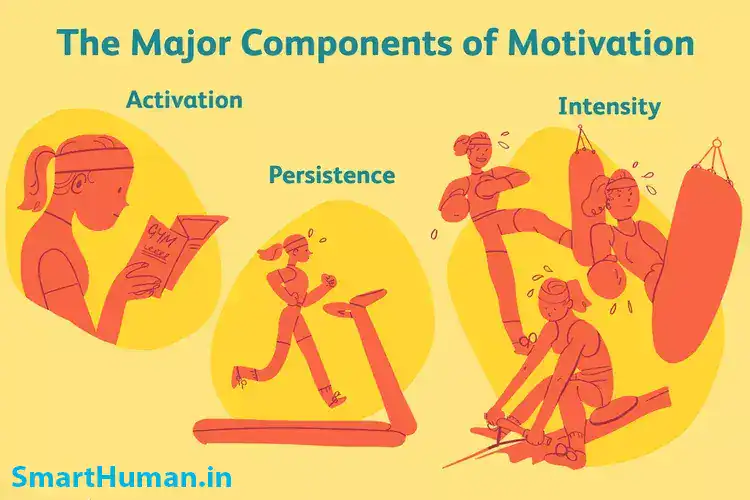
Researchers identify three main components that shape goal achievement.
Activation refers to starting a behavior.
Examples:
It represents the decision to act.
Persistence means continuing effort despite obstacles.
Examples:
This quality separates temporary interest from real commitment.
Intensity reflects the level of effort invested.
Low intensity shows minimal effort.
High intensity shows focus, dedication, and energy.
Two people may pursue the same goal with different effort levels, leading to different results.
This inner drive follows a practical pattern.
This cycle repeats daily in small decisions and long-term goals.
This driving force naturally rises and falls. People can strengthen it through deliberate strategies.
Goals connected to personal values create stronger drive. Meaning matters more than pressure.
Large goals feel overwhelming. Small steps build confidence and momentum.
Confidence supports sustained effort. Skill improvement increases belief in ability.
Past success reminds the brain that effort leads to results. This reinforces positive behavior.
Skill gaps often reduce inner drive. Targeted improvement restores confidence.
Low drive happens during stress, fatigue, uncertainty, or emotional strain.
Common causes include:
Recognizing these patterns helps restore consistency.
Long-term lack of inner drive may connect to mental health conditions such as depression or burnout. Persistent apathy and low mood require professional attention.
Mental health directly affects energy and focus levels.
Psychology explains this concept through different theories.
This theory suggests that behavior arises from inborn instincts. Survival-related actions like fear, protection, and attachment fall under this view.
Biological needs guide behavior. Hunger drives eating. Fatigue drives rest.
Maslow’s hierarchy explains human needs, starting from basic survival and moving toward self-fulfillment.
This theory suggests people seek optimal stimulation levels.
Low arousal leads to relaxing activities.
High arousal leads to excitement and risk-taking.
Inner drive fuels effort. Discipline sustains progress. Strategy directs action.
Successful individuals manage this force instead of waiting for it.
This driving force shapes how people use time, energy, and potential. Learning how it works allows individuals to take control of behavior instead of reacting to circumstances.
CTA:
Explore more self-improvement and psychology-based guides to strengthen focus, discipline, and long-term consistency.